
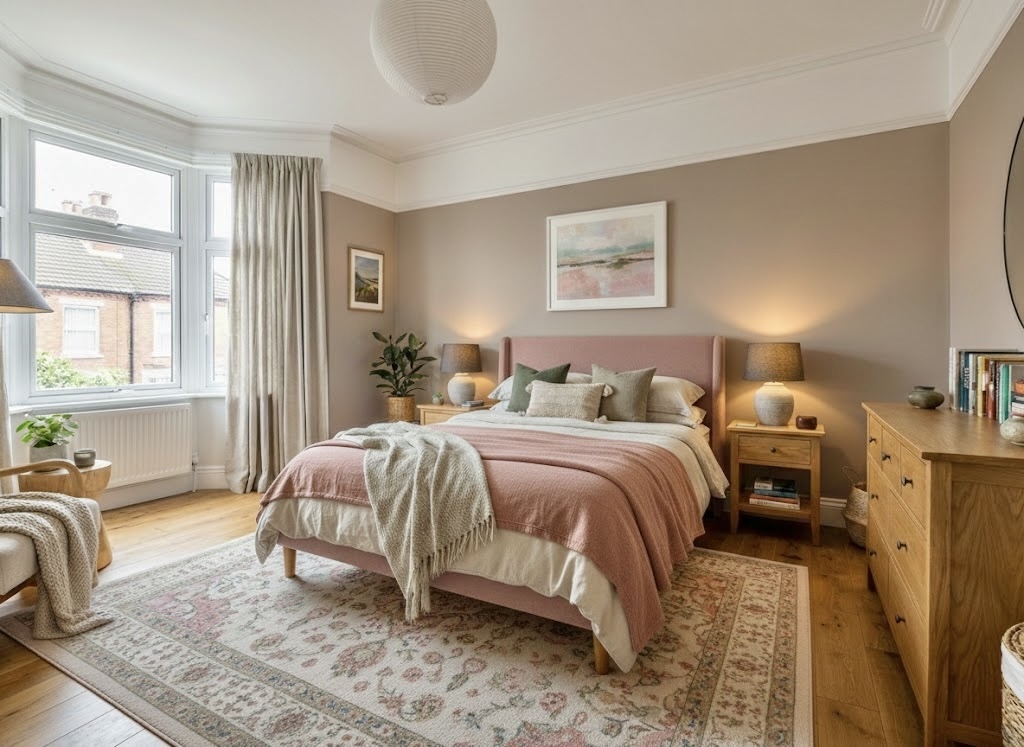
Is it really worth staging your home before trying to sell it?
If you’re thinking about selling your home, you’ve probably already received plenty of advice. Friends and family have opinions, estate agents may suggest a quick tidy-up, and searching online produces endless lists of things you apparently must do before your property goes on the market. It’s hardly surprising that one of the questions I’m asked most often is, “Is home staging actually worth it?”
My answer, after more than twenty years working with properties, is yes — especially when you’re still living in the home while it’s on the market.
That doesn’t mean every property needs a dramatic makeover. Quite the opposite. Sometimes the most valuable changes are small – removing distractions, rearranging furniture, improving the way a room flows or simply helping buyers see the best features more clearly. There is always something worth reviewing before a property is photographed and opened to viewings and the skill is knowing what genuinely needs attention and what can be left alone.
Most home staging projects aren’t about creating a show home
One of the biggest misconceptions is that home staging is for large, empty properties, and involves hiring expensive furniture, buying lots of accessories or making the house look as though it belongs in a glossy magazine. For most homeowners, it’s nothing like that.
I specialise mainly in occupied home staging — helping people prepare the home they are still living in. That means working with the furniture, possessions and budget you already have, then deciding what should stay, move, disappear, be updated or occasionally be added before photographs and viewings begin.
To me, home staging is about making the house look like the viewer’s potential new home.
That might mean changing the furniture layout so a room feels more spacious, reducing visual clutter, making better use of what you already own or helping an awkward room demonstrate a clear purpose. Sometimes spending a little money is worthwhile, but very often the most important changes cost little or nothing. The aim isn’t to disguise the property or turn it into something it isn’t. It’s to remove the distractions that prevent buyers from noticing what is already good about it.
That distinction matters because staging is different from decorating. When we decorate our own homes, our preferences quite rightly come first. When we prepare a property for sale, we’re looking at it through somebody else’s eyes and asking whether they can easily imagine their own life happening there.
Why presentation can make such a difference
Buying a home is a huge financial decision, but buyers don’t assess properties using logic alone. They’re also imagining a future: where the sofa might go, whether family meals would work in the kitchen, where children might play or whether the garden feels somewhere they would genuinely enjoy spending time.
UK research supports the importance of that visual response. Zoopla’s eye-tracking research with homebuyers found that furnishings, pictures, plants and other decorative details attracted a significant amount of attention during viewings. In other words, buyers can be surprisingly influenced by what immediately catches their eye. That doesn’t mean they ignore the structure or condition of a property, but it does show why presentation matters.
The first impression increasingly happens online as well. Before somebody reaches your front door, they’ve probably already compared your home with dozens of others on a screen. Good photographs and a property that reads clearly in those photographs can help buyers understand what they’re looking at and decide whether they want to see more.
None of this means staging guarantees a higher sale price. Nobody can honestly promise that because price depends on location, asking price, competition, market conditions and buyer demand. What good staging can do is give the property the best chance of being noticed, understood and remembered for the right reasons.
Every occupied home will benefit from staging
I believe every lived-in home benefits from being looked at through a buyer’s eyes before it goes on the market. That doesn’t mean every room needs redesigning. Some homes are already beautifully presented and may need only a few small adjustments. Others need decluttering, furniture rearranging or a clearer sense of purpose in one or two rooms.
The value of staging is not in doing more for the sake of it. It’s in identifying the changes that will help buyers see the home at its best.
This is particularly important in occupied properties because everyday life naturally leaves its mark. We need coats by the door, things on kitchen worktops and furniture arranged around our own routines. None of that is wrong, but the way a home works for the people living in it is not always the way it needs to present to someone seeing it for the first time.
I’ve also met homeowners preparing to replace perfectly good kitchens, redecorate several rooms or finally complete every job they intended to do when they moved in years earlier. I understand the temptation. Selling without finishing their planned projects feels like they have failed. The problem is that buyers may neither notice nor value some of those improvements enough to justify the cost.
One of the first things I often ask is, “Describe your home to me” and people almost always begin with everything they love about it and then eventually add, “It probably just needs a bit of sorting here and there.” That little sentence is often the biggest thing that needs changing. Looking at the property objectively can help separate the changes that genuinely matter from the ones that simply feel overdue.
That judgement is an important part of what I offer. My job isn’t to give you a longer list of jobs. It’s often to make the list shorter, put it in the right order and tell you what I would leave completely alone.
One home I’ll never forget
Although I specialise mainly in lived-in homes, one of my favourite staging projects was an empty farmhouse near Taunton in Somerset. It had been sitting on the market for months with very little interest, and the family certainly didn’t have an unlimited budget for furniture rental or an elaborate styling scheme.
Instead, everyone got involved. We borrowed furniture from the family home and even from their yurt business, arranged the rooms so buyers could understand their purpose and concentrated on making the empty property feel like somewhere a family could actually live. Two weeks later there had been fifteen viewings, and the farmhouse quickly sold for £5,000 above the asking price.
I would never suggest that every staged property will produce the same result; there are far too many variables involved in selling a house. What stayed with me about that project was the change in the way people responded to the property. Nothing fundamental about the farmhouse had changed. We had simply helped buyers see its possibilities.
Not every seller needs a full-home in-depth staging plan
You might feel confident with most of your property but just want to check one or two important rooms before photographs are taken or viewings begin. In that situation, even a simple visual direction can be enough to stop the guessing.
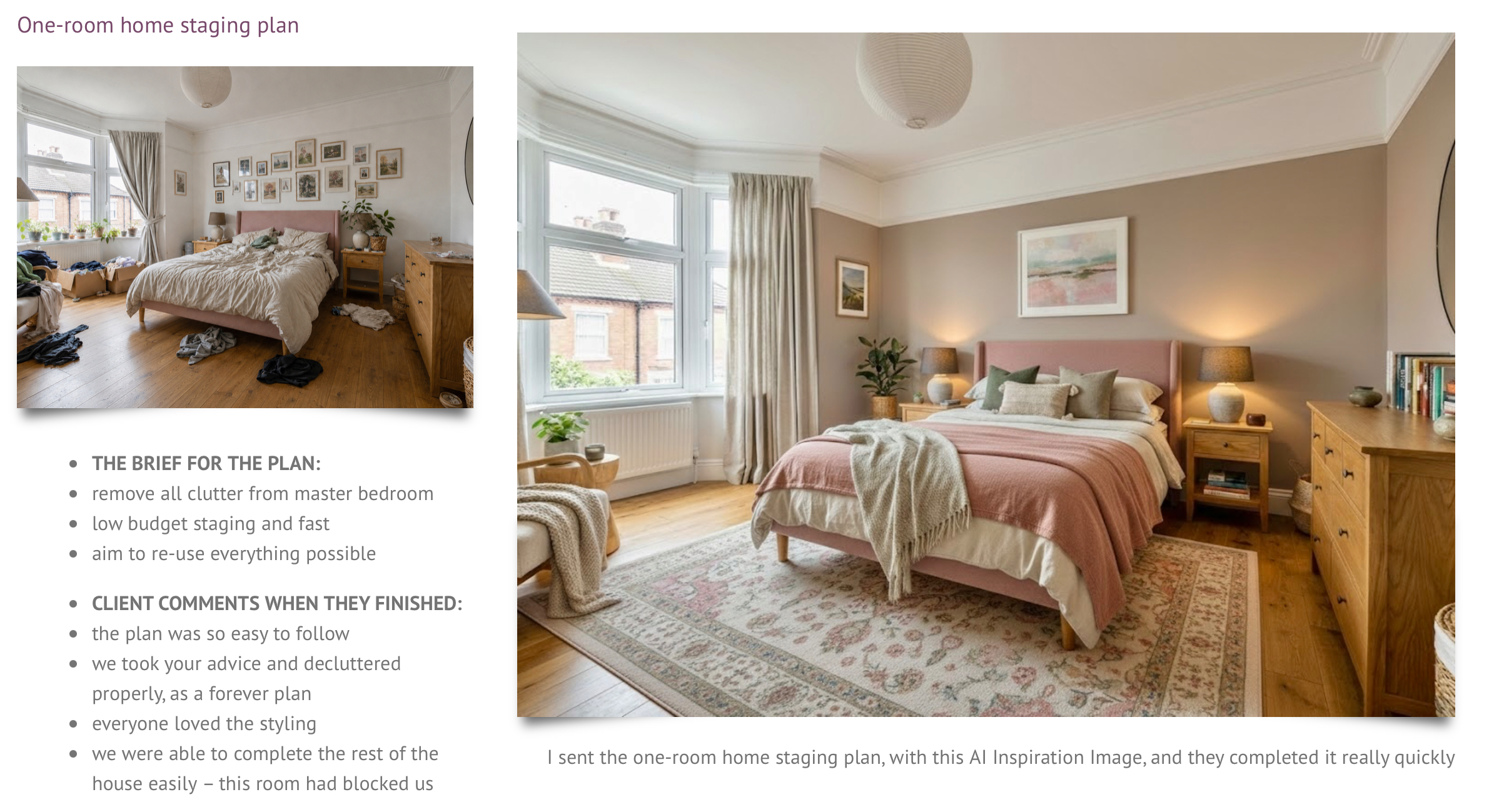
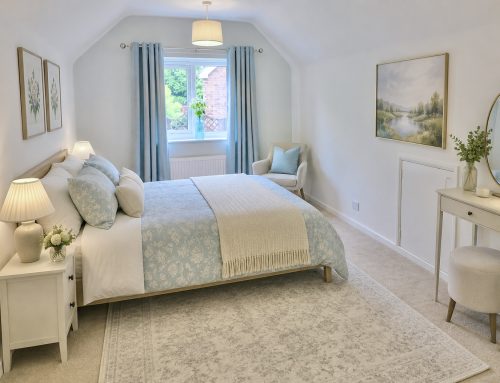
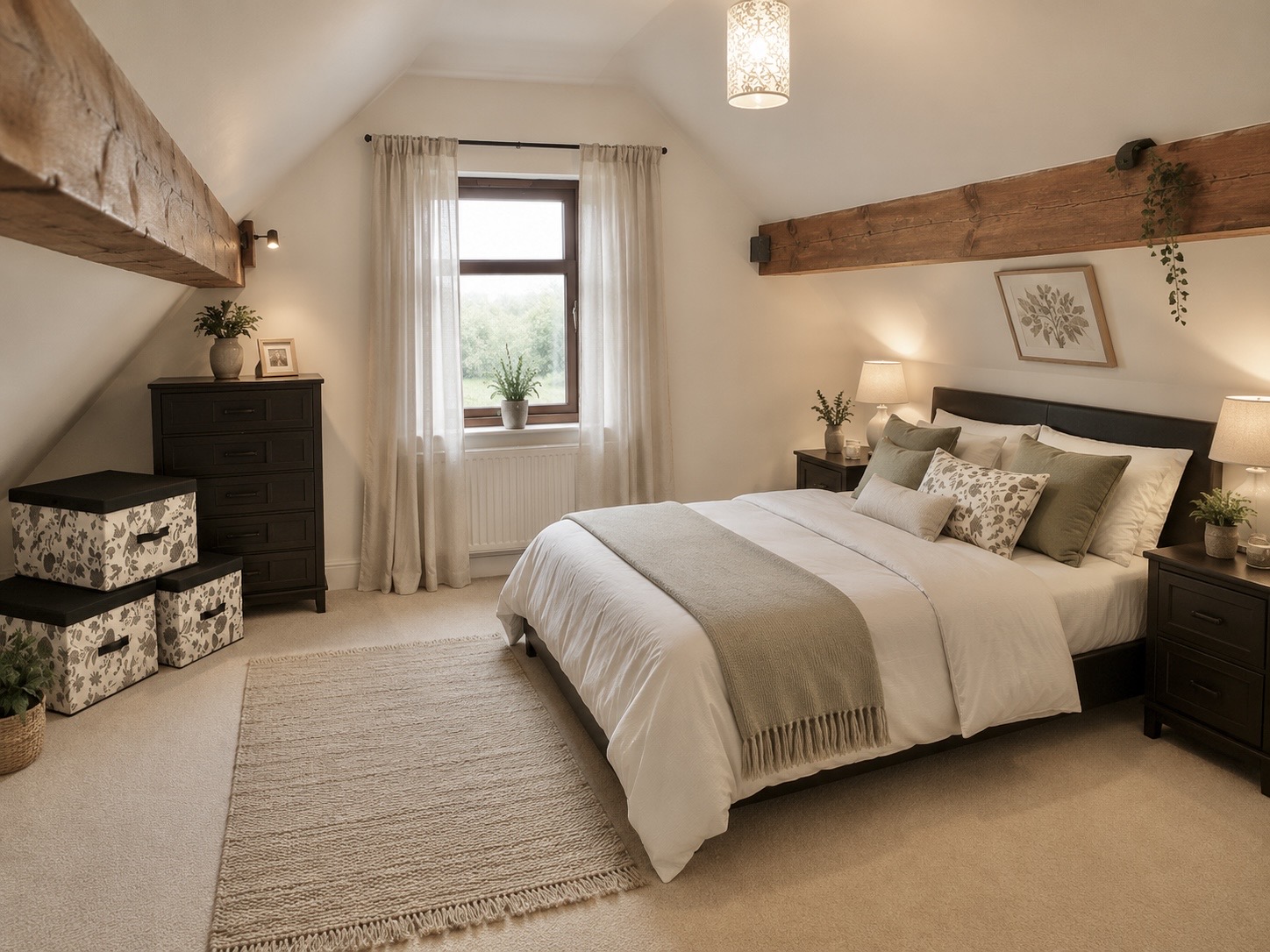
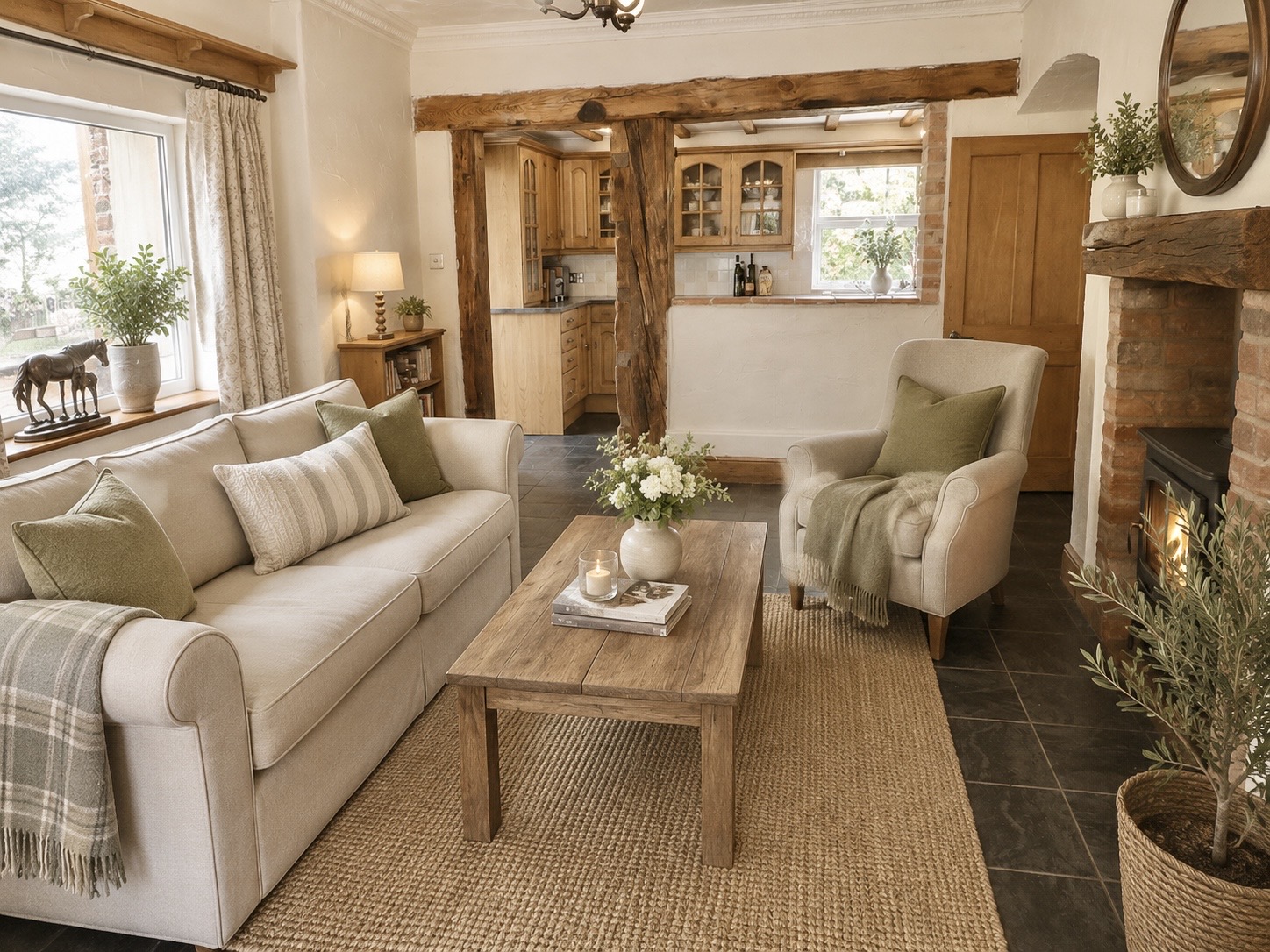
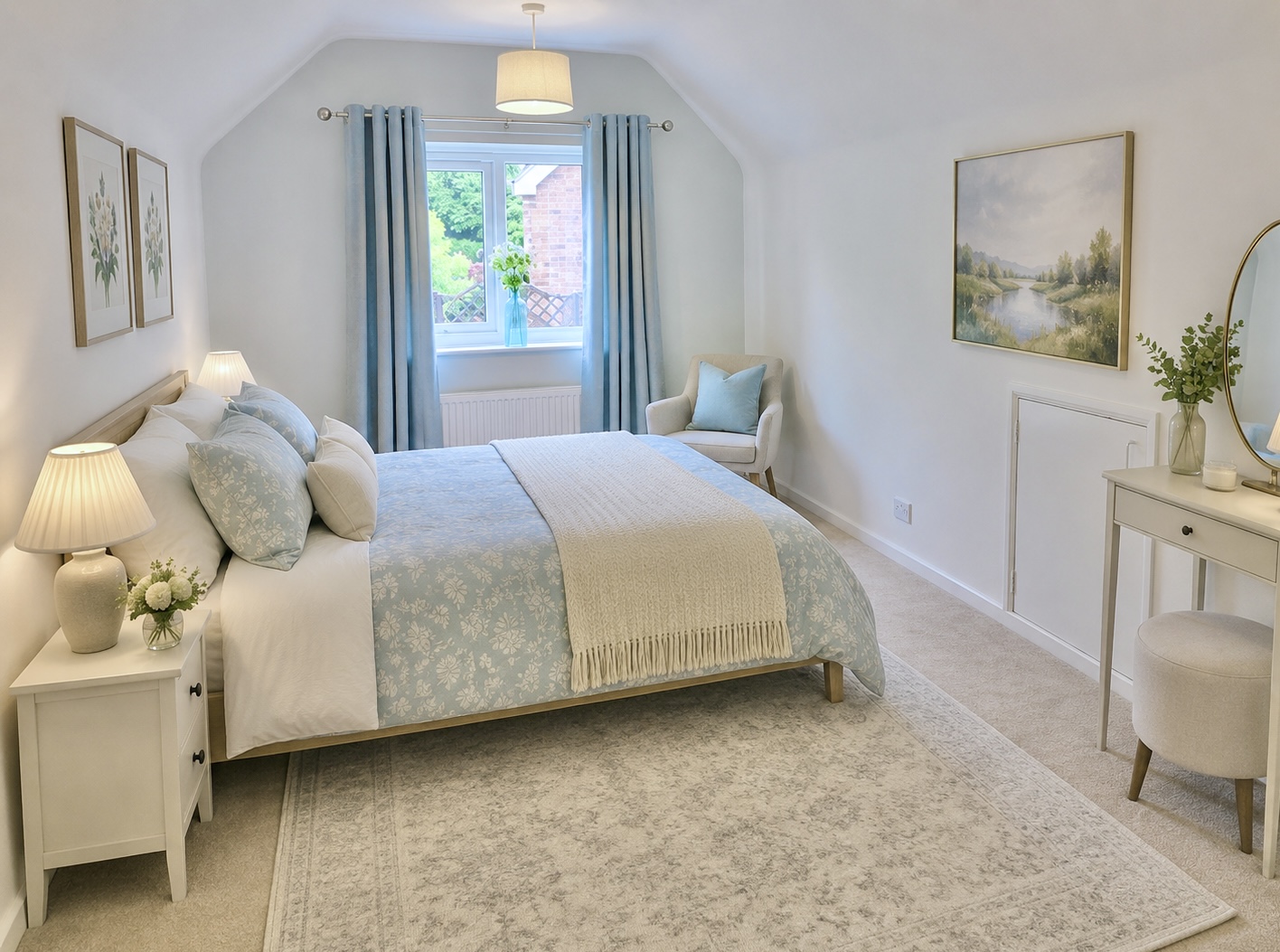
That’s one reason I offer a One-room home staging plan, with an AI inspiration image. You send me a photograph and, after looking at what you already have and what the room needs to achieve, I create a realistic image showing how I would present it. It gives you a simple, clear target before you start moving furniture, shopping or decorating, and quite often it confirms that you need to do far less than you expected.
For larger or more complicated properties, I can look at the whole home and help you prioritise the work in the same way. The point isn’t to stage everything simply because you’re selling. It’s to decide where your effort and budget are actually going to make a difference.
So, is home staging worth the cost?
Yes. Occupied home staging is always worth it because every home can be presented more thoughtfully before it goes on the market. And “the cost” may only be your time, not money.
The amount of work may be tiny or more involved, but there is always value in stepping back and asking what a buyer will see, what might distract them and which small changes will help the property make its strongest impression.
The most important decision comes before any decorating, shopping or rearranging begins – understanding what your property genuinely needs. Sometimes the answer is surprisingly small. Sometimes there’s more work to do. Either way, getting that judgement right at the beginning is usually far more valuable than discovering later that you spent a great deal of time and money improving something buyers were never particularly concerned about.
For me, that’s what good home staging is really about: not spending more, but making better decisions before you spend anything at all.
See more about home staging here


Leave A Comment